
Brazing, Vacuum & Refrigerant Handling

Testo 557 vacuum gauge and Appion core removal tools shown I've had a change of heart. Back in the early 2000s, during the big construction boom, I did many system startups on residential units for a large company I worked for. When installers ran the line sets prior to startup, they weren't always very careful […]
Read more

We already know that oxy-acetylene torches have a lot of safety considerations attached: don’t oil regulator threads, bubble-test your hoses, you get the picture. But there’s one more we haven’t really covered: the 1/7 rule (or 1/10 rule, based on the latest industry guidance). This commonly cited rule reduces the likelihood of flammable acetone coming […]
Read more

Oxy-acetylene torch tip manufacturers publish charts that tell us the ideal applications for each tip size, which is quite useful on its own. After all, a small tip may be great for a ⅜” liquid line but would hardly make a dent in 2” commercial refrigeration piping. But we can also take the information from […]
Read more

When I started in the trade, the idea of flowing nitrogen while brazing was nothing more than the punchline of a joke. Like pulling a vacuum with a micron gauge or proper recovery, it was a wink-and-nod proposition rather than a real practice. I've had to unlearn many bad habits since those early days, and […]
Read more

This tech tip about recovery cylinder fill calculations was written by Eric Kaiser from TruTech Tools. Thanks, Eric! Filling refrigerant recovery cylinders is a task HVACR technicians perform regularly, but figuring out how much refrigerant to safely put into a cylinder can still be confusing. The challenge almost always comes back to refrigerant density or […]
Read more

There are many examples of teaching using metaphors to help someone grasp how something works without being EXACTLY correct. Some examples are how we often use water flow to explain electrical flow or refrigerant circuit dynamics. It's enough like the way it works to get our heads wrapped around it, but there are many differences. […]
Read more
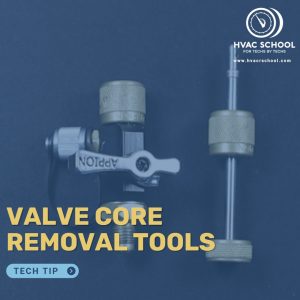
Valve core removal tools were originally developed to remove damaged valve cores without the need to pump the system down. This technology was a major leap forward in work efficiency, as pumping down a system can be a tedious and time-consuming task. Eventually, technicians discovered that removing valve cores led to faster evacuation, recovery, and […]
Read more

In these tips and on the podcast, we talk a lot about the importance of deep vacuum. Pulling a deep vacuum using proper processes and tools is really the ONLY way to ensure that a system is clean, dry, and tight. Just for review, that means: Nitrogen purge, flow, and pressurize > Cores removed > […]
Read more
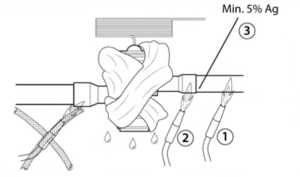
This is a quick tip from the “Expansion Valves – What Does and Doesn't Matter?” livestream on our YouTube channel featuring Joe Shearer, Matthew Taylor, and Corey Cruz. It’s time to talk about brazing again! Even though rehashing “flow nitrogen” and “use a wet rag” gets a little old, bad TXVs and callbacks also get […]
Read more