
Brazing, Vacuum & Refrigerant Handling

This tech tip was written by Don Gillis with Chemours. Thanks, Don! Evacuation helps remove contaminants, like moisture and non-condensable gases, from HVAC/R systems, especially ones that are put into service for the first time or put back into service after a repair. Even though pulling a deep vacuum has always been a best practice, […]
Read more
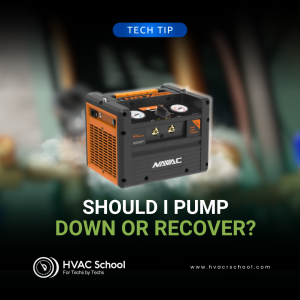
During my second year in HVAC, the company I worked for was hired to fix some poor work that was done on a multi-head inverter system. The system used flare connections, and many of them were leaking. The system also had a branch box, which meant there were even MORE flares. So we pumped all […]
Read more

In the last year or so, I have had a couple of puzzling experiences related to pulling a vacuum. These instances have left me with questions and clues where I thought I had given up on understanding a certain vacuum situation. Typically, if I’ve had a hard time achieving a proper vacuum, I would be […]
Read more

Recovery is the removal of refrigerant from a system. From there, you can either store it and send it in for recycling or reintroduce it back into the same system. Here are some top tips: Make sure your tank is empty and evacuated to 300 microns if you plan to return the refrigerant to the […]
Read more

To answer the question in the title, we use it as a measurement of pressure. REALLY, it is a measurement of distance. First, any scale CAN be used to measure vacuum (negative pressure) and positive pressure. The trick is knowing which is best suited for which and the size of the scale. Larger units of […]
Read more

In HVAC, you will hear the word “flux” used in two totally different parts of the trade. You may have heard of magnetic flux before. Magnetic flux is the lines of force that emanate from a magnet. You often hear about magnetic flux lines in discussions of motor theory. Transformers also use electromagnetic flux to […]
Read more
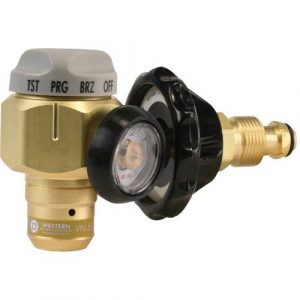
My technician (and brother-in-law), Bert, made a good point. (It's hard for me to admit it, but it's true.) When he needs to open the refrigerant circuit to make a repair, regardless of whether he is recovering or pumping down, he pulls out his nitrogen tank and his regulator. (We like the Western Enterprises VN-500 […]
Read more
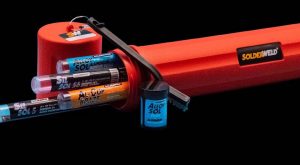
When brazing and soldering, we have a few things we need to accomplish to make a proper connection: We can't overheat the joint until it overheats the base metal or the flux where applicable. We must bring the entire joint above the melting temperature of the brazing alloy. Draw the alloy deep into the joint. […]
Read more

This topic came up because I was testing out the new MR45 digital recovery machine. That machine goes off by itself when it hits a 20″ Hg vacuum. It's a cool feature, but it is good to know when that level of vacuum is overkill and when it's not enough according to EPA requirements. You […]
Read more