
Refrigeration Circuit, Charging & Diagnosis

In this article, we’ll discuss solving superheat using this diagnostic sheet to help us better understand how it is calculated and from where it is derived. I want to thank Ty Branaman for helping me develop these sheets that will hopefully aid in a better understanding of some of the basic HVAC measurements that both […]
Read more
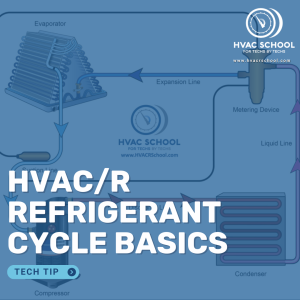
This is a basic overview of the HVAC/R refrigerant cycle (and refrigeration circuit) and how it works. It isn't a COMPLETE description by any means, but it is designed to assist a new technician or HVAC/R apprentice in understanding the fundamentals. First, let's address some areas of possible confusion: 1. The word “condenser” can mean […]
Read more
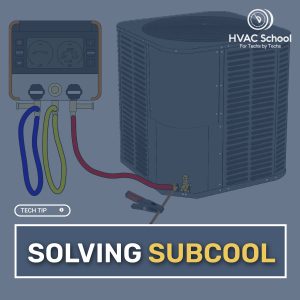
I teamed up with Ty Branaman to design an intuitive way for techs to solve some of the “what should it be?” questions in the HVAC field. The topic for this sheet is subcooling (or subcool). Subcooling is a measurement of the temperature DECREASE of a liquid below its saturation (mixed liquid/vapor) temperature at a […]
Read more
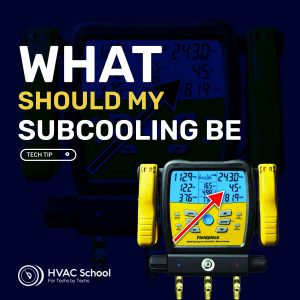
This is the article you read BEFORE you call and ask a senior tech what your subcooling should be. It's also the one you send to a junior tech when they call and ask you: So, what is subcooling? (Or subcool, as many call it.) Subcooling is a measurement of the temperature DECREASE of a […]
Read more

It took me years to build a picture in my head of what superheat and subcool mean. They were these strange words that dropped out of nowhere when I entered the HVAC world, and in the midst of grappling with so many other things, I could tell they were very important. Over time, I have, […]
Read more

So many techs are OBSESSED with how to set the charge rather than understanding all of the readings, specs, and system conditions that go into optimum system performance. Before “setting the charge,” I suggest (nay, I REQUIRE) that you do a full visual inspection of the system, have an understanding of the initial factory charge […]
Read more

The temperature of the refrigerant in the evaporator coil can really help us with diagnostics, but we need to know the targets we’re aiming for if we want to get the most out of it as a troubleshooting tool. If we take the return air temperature and subtract 35 degrees from that number, we get […]
Read more
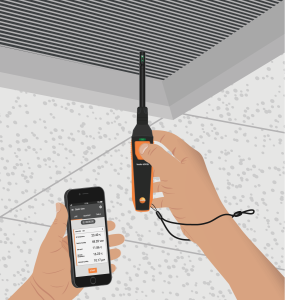
Over time, I’ve seen people use just about every type of temperature-measuring device in just about every location imaginable. From drilling tiny holes into rooftop unit panels to sticking a K-type wire into a piece of flex duct (I don’t remember why), I’ve done it all. Coming up through the trade, I’ve been TOLD to […]
Read more

We have discussed many methods for checking a refrigerant charge without connecting gauges over the last few years. Recently, I've been thinking about the “approach” method of charging that many Lennox systems require. What is the Approach Method? The “approach” simply refers to the temperature difference between the liquid line leaving the condenser and the […]
Read more